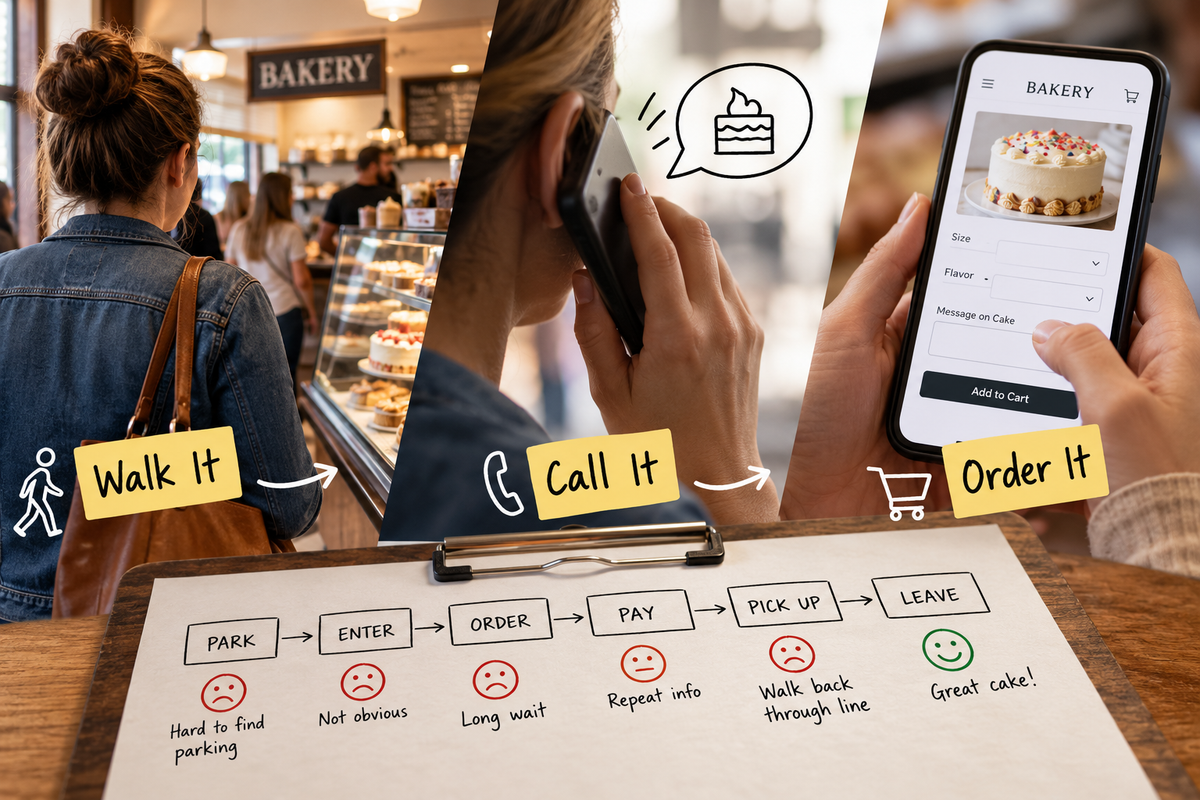
Walk It, Call It, Order It: How to Test Your Bakery Like a Customer
There's a thing factories have done for fifty years that never made it across to the retail side of this business.
Somebody walks the floor with a clipboard and follows one part all the way through. Where it comes in. Where it sits. Where somebody picks it up, puts it down, and picks it up again for no reason. Every step on one sheet of paper. Then they stare at the sheet and ask: which of these made the thing better, and which were just waiting around?
That's it. That's value stream mapping. Fancy name, clipboard job. Big wholesale bakeries run it on their production lines. Almost nobody runs it on the customer.
So let's run it on the customer.
What is value stream mapping for a bakery?
Value stream mapping for a bakery means following a customer through every single step of buying from you. From the second she decides she wants something to the second she's back in her car with the box. Then sorting those steps into two piles: the ones that made her glad she came, and the ones that just cost her time.
Some of those steps are the good stuff. Picking a flavor. Seeing the case. Getting handed a box with her name on it. That's what she's paying for.
The rest is just her time. Standing in the wrong line. Repeating her phone number. Waiting on hold. Pushing back through a crowd of people buying scones to find out if her cake is ready. None of that made her cake better. It only cost her something.
Telling those two piles apart is the whole exercise. It's worth an hour of your week because you can't see any of it anymore. You've walked through that door nine thousand times. You know which counter is the pickup counter. She doesn't, and you stopped being able to tell the difference years ago.
So here are four walks. Do one this week.
How to walk your bakery like a first-time customer
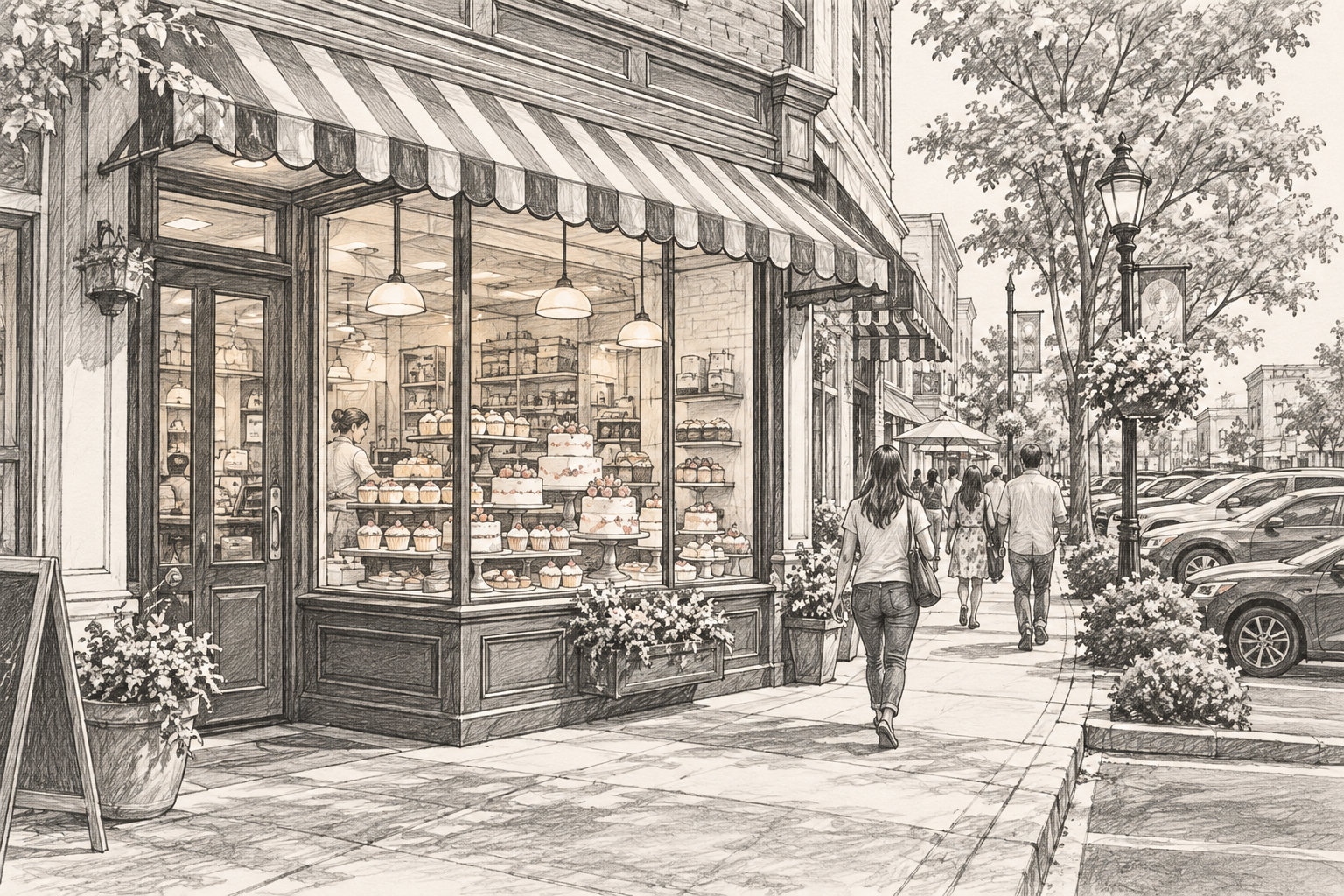
Walking your own bakery means parking where a stranger would park and going through the whole visit at a stranger's pace. Count steps, time waits, and write down every moment of confusion you'd normally walk straight past.
Park out front, not in your spot round the back. Then go slow and be honest.
How far is that from the door? Is the entrance obvious, or is it the second door down past the gate? Does the door open in or out, and is she working that out one-handed with a toddler?
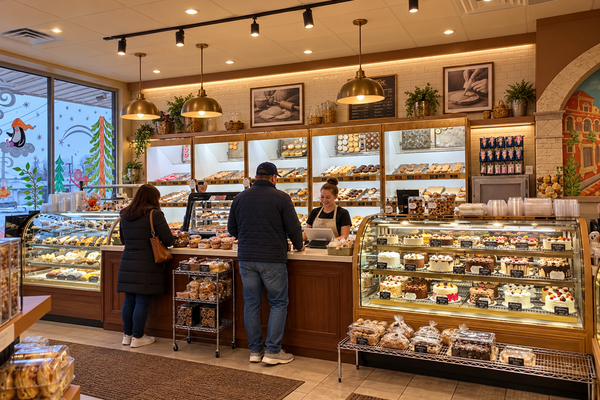
Now she's inside. Notice where your eyes go first. The case? A menu board? A stack of boxes? Is it obvious where to stand? Is there a line, and does anybody know where it starts? Is there a separate pickup spot, and would a first-timer ever guess that?
Does anyone say hello? How many seconds? Actually count.
Can she read the menu from where she's standing, or only after she's committed to the line? Are prices on it, or is that a conversation she has to start?
At the counter, how many back-and-forths does it take to order? Does the person behind it know the lead time on a six-inch? Can they quote her without going to find you, or a manager, or a decorator?
Then payment. Then the one most shops get wrong. Where does she pick it up? Does she walk back through the line she just left, holding a sheet cake, saying excuse me to eleven people? How does she get out the door with her hands full?
Count the steps. Time the waits. Write down every single place you thought hmm.
You'll find three or four things that make you wince, and at least one has been there for years.
How to test your bakery's phone ordering experience
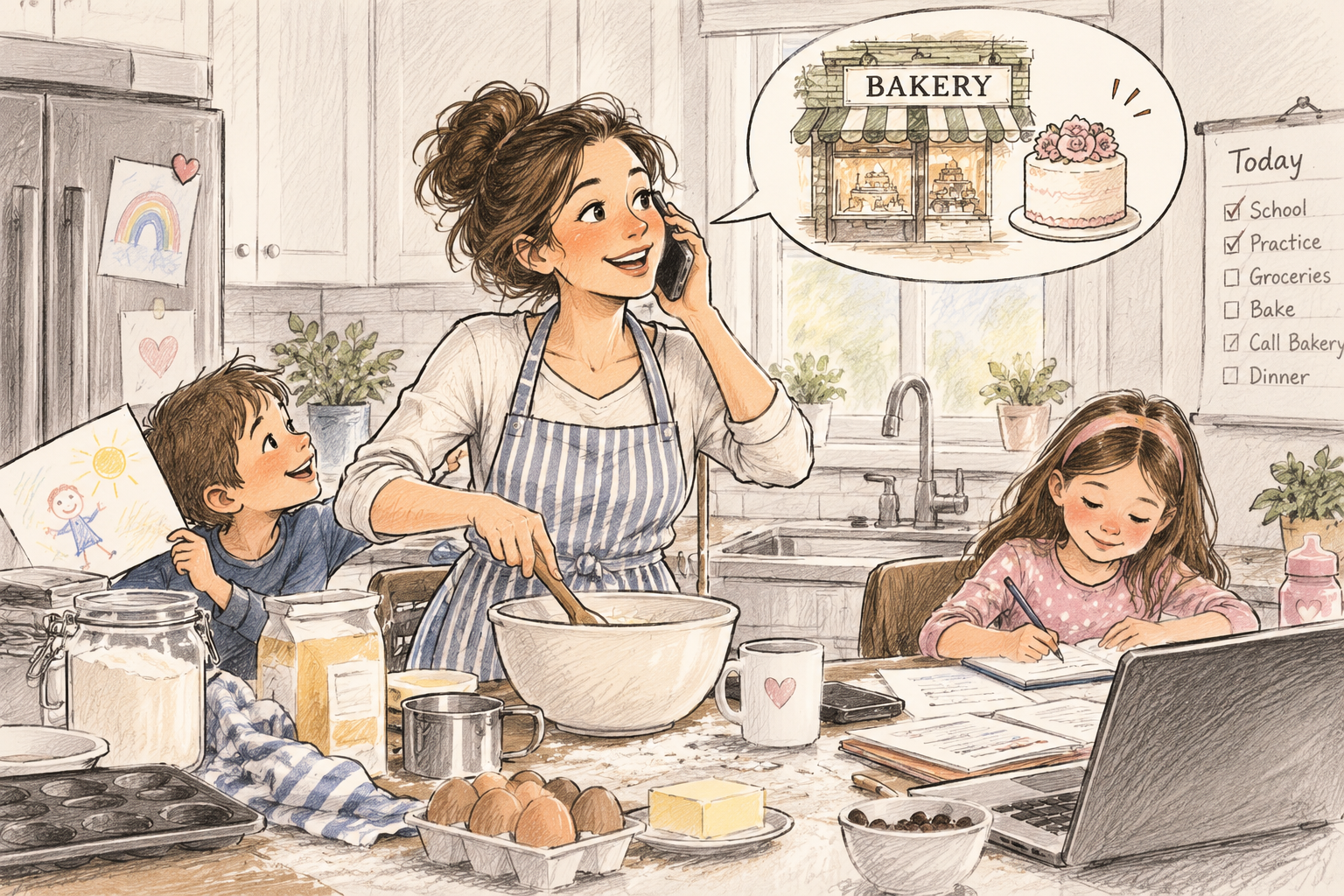
Testing your bakery's phone experience means calling your own shop at your busiest hour as a stranger would, ordering a cake start to finish, and timing how long it takes to get a clear answer on size, flavor, price and date.
From your kitchen, while managing 5 other things, Saturday at 10:15. Not Tuesday at 2. Tuesday at 2 is a different bakery and you know it.
You're a customer who has never called here before. That's the whole act.
How many rings? Does anybody pick up at all? Is the first word the bakery's name, or just "hello"? Do they sound happy you called, or like you interrupted them?
Ask about a cake. Then shut up and listen.
Can they explain sizes without hedging? Flavors? Fillings? Do they know what a six-inch feeds? Do they ask the right things? Date, head count, what the party's for. Or do you have to volunteer everything? Do they give a price, or say "it depends"? Do you get put on hold? Transferred? Told Maria does the cakes and she's in Thursdays?
Time the call. Then answer one question honestly: at the end of it, would you feel taken care of, or like you still have homework?
That's what's brutal about the phone. You can have a beautiful shop, a good website and a front-of-house team you'd put against anyone, and still have a 9am phone experience that quietly costs you a cake a day. Nobody calls back to tell you the call was confusing.
How to test your bakery's online ordering on a phone
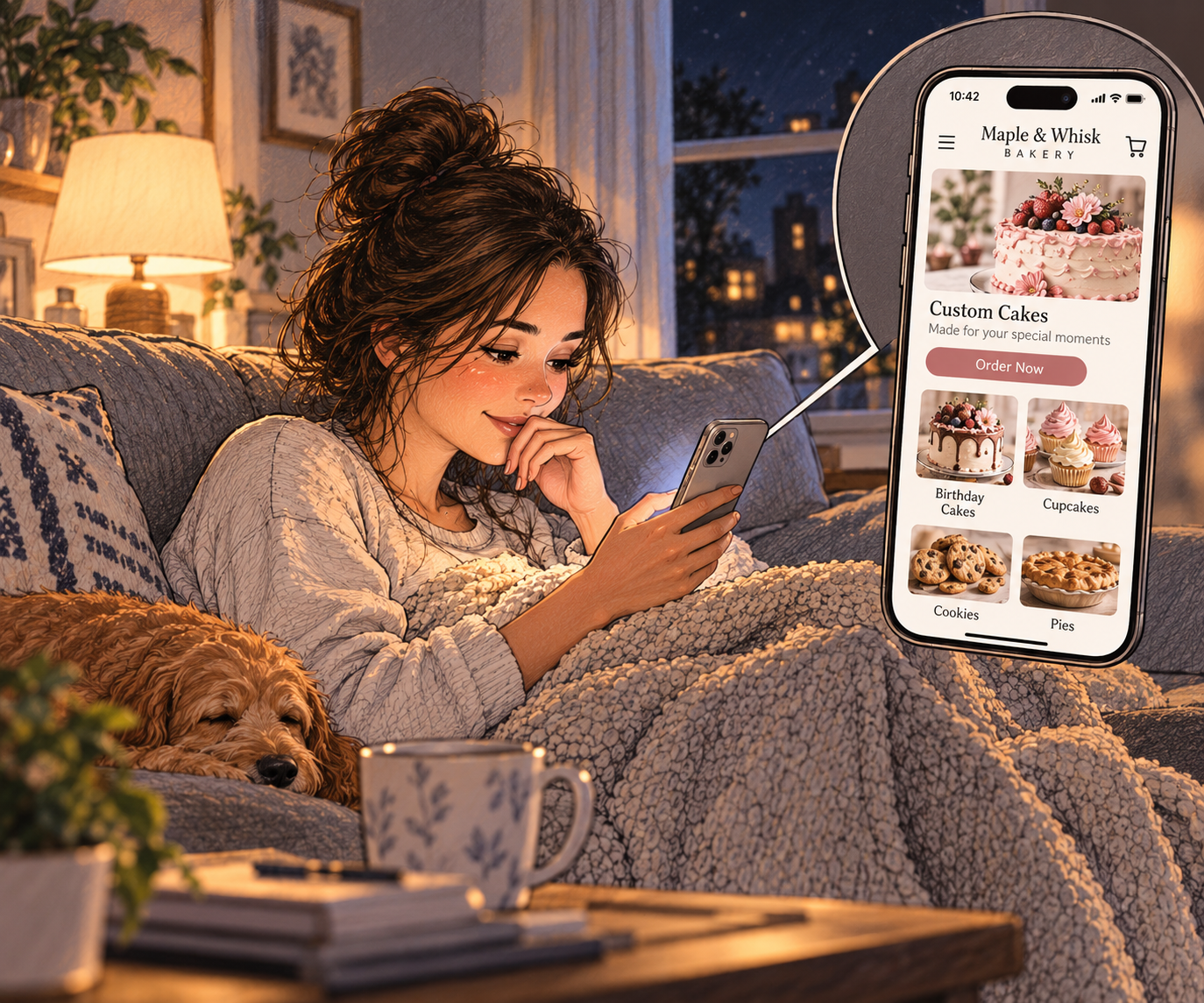
Testing your online ordering means placing a real order from your own phone, logged out, as a first-time customer. Count every tap, every repeated field, and every point where you'd have given up if it weren't your own shop.
Not your laptop. Your phone. Thumb only.
Try to buy a cake for a week from Saturday.
Can you find cakes in under ten seconds? Are the photos actually your cakes? Can you pick a size, flavor, filling and message without guessing? Is the price visible before checkout, including delivery and whatever the "premium" charge is? Can you find out early, not on step four, whether that Saturday is even open?
Count the taps. Count the times you type something twice. Count the required fields that don't need to be required. Does it make you create an account before it'll take your money? Is Apple Pay or Google Pay there, or are you thumbing in sixteen digits?
Then the confirmation. Does it say what she ordered, when to come get it, and what she still owes? Or just "thank you for your order"?
Here's the test we'd hold the whole thing to:
Could a nine-year-old get through it?
Not because kids should be ordering cakes. Because a nine-year-old doesn't read instructions, doesn't know your lingo, and quits the second it gets confusing. Which is also a fair description of a tired adult on a phone at 9:40 at night.
What about the customer who just wants a croissant?
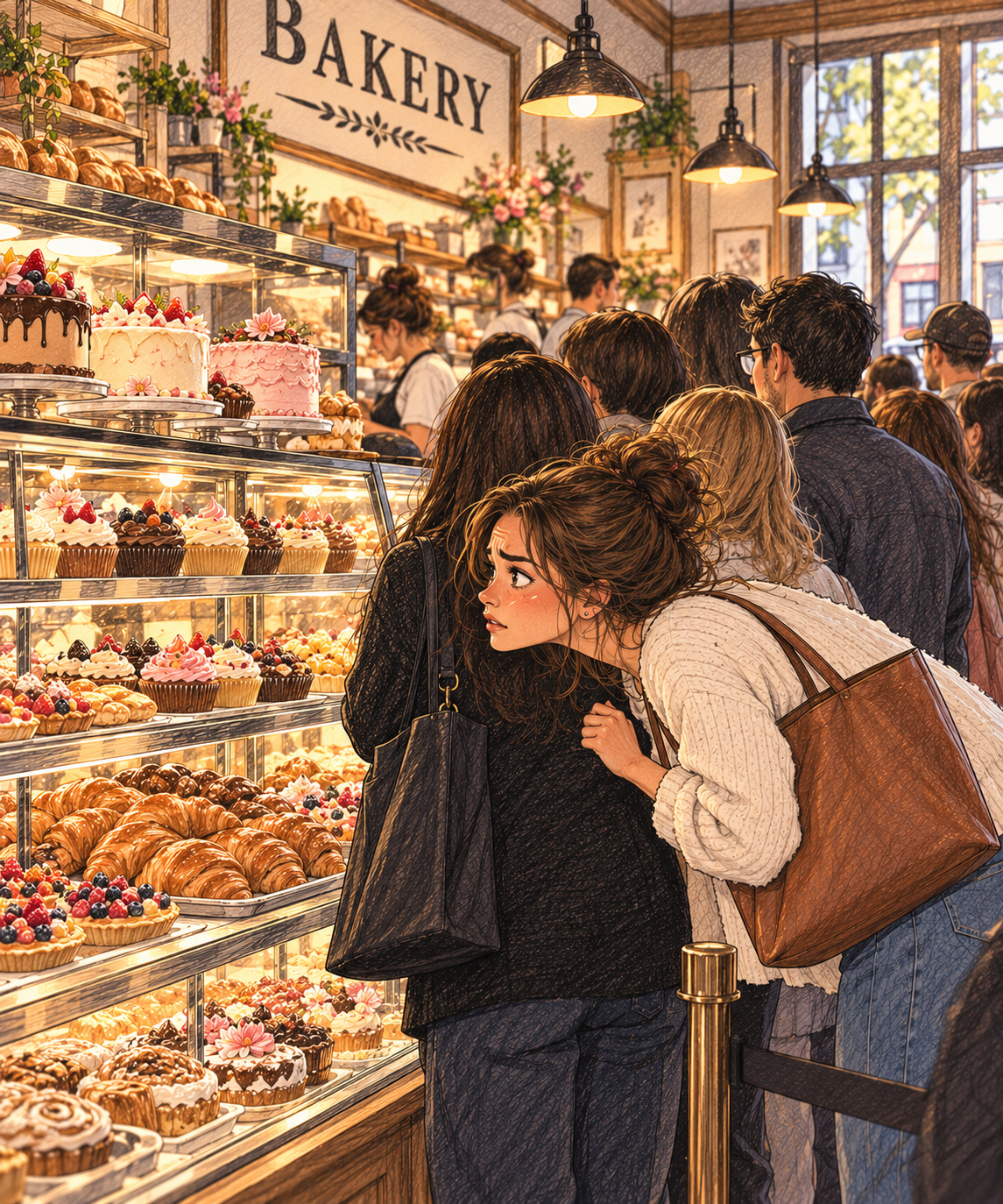
The display-case customer has a completely different value stream from the custom cake customer, it runs in about ninety seconds instead of two weeks, and in a lot of bakeries it's the larger share of the money.
Owners skip this one because it feels too simple to map. It isn't. It's just faster, which means the friction is measured in seconds and every second lands on a lot more people.
Walk it the same way, Saturday at 9:30 when there are eight people in front of you:
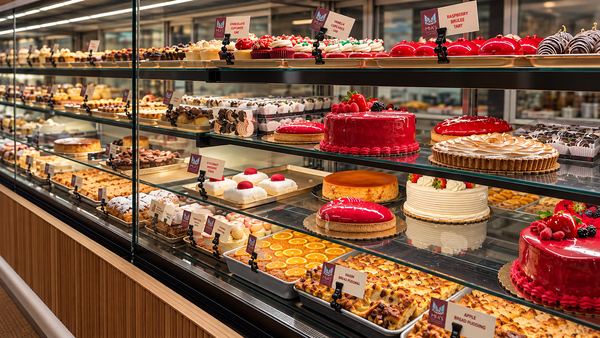
Can she see what's in the case from the back of the line, or only when she gets to the front? Are the labels readable from three feet, and do they have prices? Does the line move, or does it stop dead every time someone has a question that could have been answered by a sign?
When she gets to the front, is she rushed? Is there somewhere to put a coffee down while she gets her wallet out? Is the card reader facing her, or does she have to lean over the case?
And the big one for a case business: does she know what's good? If she's never been in before and she's looking at twenty things, is there anything telling her what you're known for? Most shops have an answer to that question and never put it anywhere a stranger can see it.
Then: does she leave knowing she can order a cake here? A huge share of custom orders start as somebody who came in for a coffee six weeks earlier. If the case customer never learns you do cakes, that's the most expensive piece of friction in the building, and it's invisible because nothing went wrong.
How to map your bakery's customer journey on paper
A bakery customer journey map is one sheet of paper listing every step a customer takes, with four things noted against each: how long it took, where she waited, where she got confused, and where she had to repeat herself or do work you should have done.
Paper and a pen. That's the whole toolkit.
| Step | Time | Waiting? | Confusing? | Her work or ours? |
|---|---|---|---|---|
| Calls the shop | 4 min | 6 rings, 90 sec on hold | Which flavors are available | Ours |
| Asked to call back with a head count | n/a | 2 days | Didn't know a six-inch feeds 8 | Hers |
| Comes in to pay deposit | 25 min round trip | 10 min in the morning line | Pickup counter isn't marked | Hers |
Three rows in and it's already obvious what to fix.
Then do a before and after for one journey. Here's a phone order:
| Before | After | |
|---|---|---|
| 1 | Calls, six rings, lands on hold | Answered in two rings with the bakery's name |
| 2 | Asks about cakes, told Maria's in Thursday | Whoever answered quotes from a rate card by the phone |
| 3 | Calls back Thursday | (gone) |
| 4 | Gives date, size, flavor, head count | Gives date, size, flavor, head count |
| 5 | Told to come in to pay the deposit | Deposit link texted while she's still on the call |
| 6 | Drives over, waits in the morning line | Taps Apple Pay in the car |
| 7 | Pays, no written confirmation | Text confirmation: what, when, what's owed |
| 8 | Calls back Friday to check it's happening | (gone) |
| Total | Four contacts over six days | One call, under five minutes |
Same cake. Same price. Same bakery. The difference is that in the second one, the shop did the work.
Nothing there required software. It required somebody putting a rate card next to the phone and deciding the order gets written down once, by whoever picks up.
That's the whole principle, and it's worth sticking on the wall:
The customer should not have to do the bakery's work.
She shouldn't have to learn your process, chase your team for an answer, repeat what she already said, or know what an order number is. You do the hard part in the back. She says what she wants.
Where this breaks
Four honest limits, because this isn't magic.
Don't map in December. Map your busiest month and you'll get a map of your busiest month. Fix things for a peak you run six weeks a year and you'll make the other forty-six worse.
Some friction is load-bearing. Your deposit policy is friction. Your 72-hour notice on changes is friction. Your minimum on wholesale is friction. Removing those isn't customer service, it's just giving money away. The friction worth killing is the kind that costs her time without protecting you.
Check the back before you change the front. Taking a step out at the counter often adds three in the kitchen. Same-day custom orders are a lovely idea until Saturday. Map the production side of any change before you promise it out front.
Don't walk it if you can't fix it. If you're six weeks from a lease decision or you're down two staff, you'll just generate a list of things that make you feel bad about your shop. Wait until you can act on it.
Do you need software to fix bakery customer experience?
No. Improving your bakery's customer experience is a process change, not a purchase. Software can make a good process faster, but it can't turn a confusing one into a clear one.
You can run a beautifully smooth bakery on paper order forms and a pen. You can run a miserable one on expensive software. The shop with the clipboard that answers in two rings, quotes a price in thirty seconds and texts you a photo when the cake's boxed is beating the shop with the fancy online store and a five-step form.
Good process first. Tools second.
What technology does is make a good process faster and bigger. Deposit reminders that go out without you remembering. One order in one place, so the kitchen and the counter see the same pickup time. A card taken at 10pm. That's real, and at some point it's worth it.
But software will cheerfully automate a confusing process and hand it back to you running faster. It can't decide that the pickup counter should be by the door. Only the clipboard can do that.
How much is removing friction worth to a bakery?
Removing friction increases sales without increasing traffic, because it converts more of the people already asking, and because it compounds across every touchpoint at once.
Here's the arithmetic. These are illustrative numbers to show the shape of it, not a promise and not a benchmark.
Say 40 people a week seriously ask about a custom cake: DMs, calls, website starts, counter conversations. Say 22 turn into orders.
Now you fix three things. The phone gets answered in two rings. The website stops asking for an account. The counter can quote without finding you.
You go from 22 to 25. Three more cakes a week. At an average custom cake of $85, that's $255 a week. A bit over $13,000 a year.
No ad spend. No new hire. Not one extra person interested in your bakery. You just stopped losing the ones who already were.
And that's the direct part only. The quieter wins stack up too: fewer remakes, less time on the phone untangling confusion, faster lines on Saturday, better reviews, since "easy" is what people actually write reviews about, and more of them back for the next birthday.
Small improvements in a lot of places. That's where the money is in bakery operations, and it's the cheapest growth you'll ever buy.
Where to start this week
Pick one. Just one.
Walk in your own front door. Call your own shop. Order from your own website on your phone. Or stand in your own case line on a Saturday.
Write down every step. Circle the three worst moments. Fix one before Friday. The one that costs nothing. Then do the next walk next week.
If you only ever take one thing from this:
Just you, walking in your own front door like a stranger, paying attention to what annoys you.
You already do this in one place, by the way. You did it when you picked your shop and thought about where people would park.
Now do it with everything after the parking lot.
Common questions about mapping your bakery's customer experience
What is value stream mapping and how does it apply to a bakery?
Value stream mapping is a method from manufacturing where you follow one item through every step of a process and separate the steps that add value from the steps that only add time. In a bakery, you follow a customer instead of a product, from first contact to walking out with the box, and sort each step the same way.
How do I find out why customers abandon my online cake orders?
Place an order on your own phone, logged out, as a first-time customer. Count the taps, the fields you fill in twice, and the points where you'd have to stop and look something up. The place you'd have quit if it weren't your own shop is where they're quitting.
How long should it take to place a custom cake order over the phone?
Under five minutes, with one call and no callback. If a customer has to call twice, or wait for the one person who knows cake prices, the process is costing you orders you'll never hear about.
What should a bakery order confirmation include?
What was ordered, including size, flavor and any writing on the cake. The pickup or delivery date and time. What's been paid, what's still owed, and when it's due. And where to go when she arrives. Anything missing becomes a phone call for your team.
How many clicks should it take to order a cake online?
Fewer than you have now. A better test than counting: no account creation before payment, the available dates visible before she fills in her details, and a tap-to-pay option at the end.
Is it worth fixing my bakery's ordering process before buying software?
Yes, and it's the right order to do it in. Software applied to a confusing process gives you a confusing process that runs faster. Map it first, fix what's free, and you'll also know exactly what to ask a vendor to solve.
I'm already busy, so why would I bother mapping the customer journey?
Because busy hides the losses. The customers you never hear from don't show up in a busy week, and a busy shop is usually the one where the small frictions have had the longest time to settle in unnoticed.
What are the most common friction points in bakery ordering?
Being asked to move channels (DM to web form, counter to website). Repeating information already given. Waiting on one person who knows prices. No clear pickup point in the shop. Account creation before checkout. Manually typed card numbers. And silence. No answer for two days on a question with a deadline attached.
Should I map the display-case customer too?
Yes, and most owners skip it. The case journey takes ninety seconds instead of two weeks, but it's usually more of the revenue, and it's the main way new customers find out you do custom cakes at all.
How do I know if my bakery website is too hard to use on a phone?
Hand it to someone who's never used it and say nothing. Watch where their thumb stops. Don't help them. The flinch is the finding.
Sources: value stream mapping as a method is documented in the lean manufacturing literature. The bakery applications and example figures above are illustrative, drawn from common patterns in independent retail bakeries rather than from a survey.