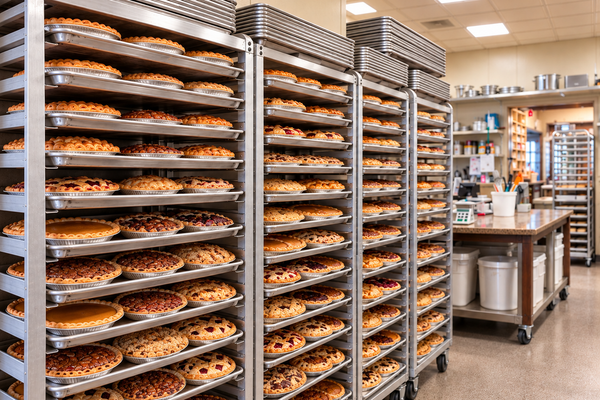
Bakery Front of House Training: What to Say in Every Situation
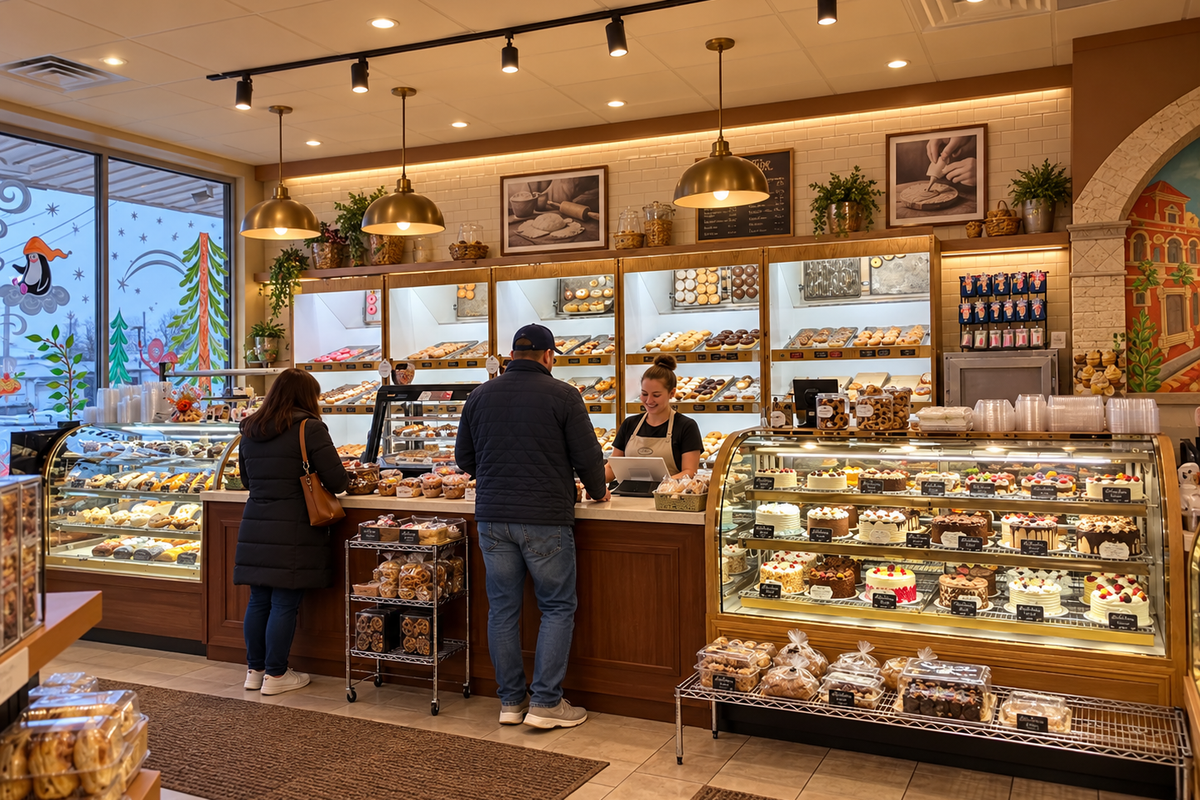
The words your counter staff need, from hello to "this cake is wrong"
Training front of house staff in a bakery means giving them the exact words for about fourteen things that happen every single day. Saying hello. The phone. Explaining the case. Suggesting something extra. Allergy questions. Cake orders at the counter. Coffee. The register. Pickups. A line out the door. Somebody unhappy. Refunds. Saying no. Regulars. Teach them the sentences, not the attitude.
Most of us hand a new person an apron, show them the register, and hope.
Then on their third day the cake says Happy Birthday Alison and the customer's name is Allison. The kid freezes. And that's when you find out you never told them what to do.
Here's the thing about hoping. In food service, 5.4% of everybody working walks out the door in a single month, against 3.2% across all other industries (US Bureau of Labor Statistics). Your counter is almost always partly staffed by somebody new. So service built on experience is going to be uneven forever. Service built on fourteen memorized situations survives the turnover.
This is all of them. Start to finish, including the parts that go sideways.
Download the free printable checklist. Seven pages. The ten shift training plan, the words to pin by your register, your open and close lists, and a sign off sheet for each new hire's file. No email needed.
Jump to what you need
- How should staff say hello?
- How do you answer the phone when you're slammed?
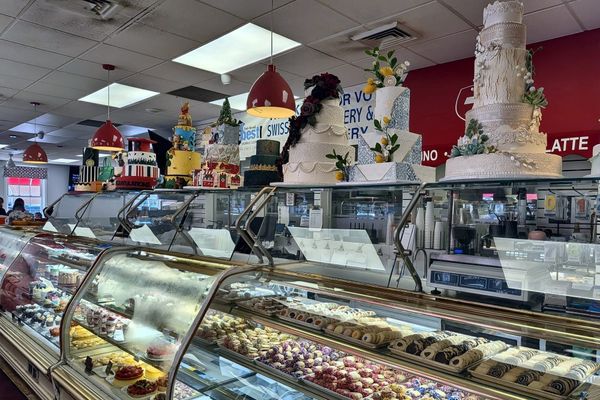
- How do you explain what's in the case?
- How do you suggest something extra without being pushy?
- What do you say about allergies?
- How do you take a cake order at the counter?
- How do you run the register and hand over pickups?
- How do you handle a line out the door?
- What do you say when somebody's unhappy?
- Who's allowed to give a refund?
- How do you say no and still be nice?
- Do bakery staff need a food handler card?
- The one page cheat sheet
- Questions people ask
Three rules, then the details
Everything below is really just one of these three.
Say the yes first. Answer what they actually asked before you explain anything else. "Yes, the 22nd is open" comes before the deposit policy. People relax once they've got their answer, and a relaxed customer buys more.
Never send somebody away to finish. At your counter, finish at your counter. On the phone, finish on the phone. "Hop on our website and fill out the form" is homework. Homework doesn't get done.
Never make them wait for one particular person. "Maria does the cakes, she's in Thursday" loses the order. Anybody in an apron should be able to take a cake inquiry, find an order, and say what's in the case.
1. How should staff say hello?
Every customer gets acknowledged inside three seconds of the door opening, even when your hands are full. Look up, say hi, give them a time, then go back to what you were doing. People don't mind waiting. They mind being invisible.
What usually happens is the door opens while you're boxing six cupcakes with your back turned.
Say this:
"Morning! Be right with you, one minute."
"Hi! Have a look at the case, I'm right behind you."
"Hey, good to see you. Still the oat milk latte?"
Don't say this:
- Nothing at all. That silence while you finish a job is the number one thing people complain about in bakery reviews.
- "Next." That's a deli line, not a conversation.
- "Can I help you?" while you're already walking away.
Here's one from a real Saturday. Dani is bagging an order with her back to the door. A woman comes in with a toddler. Dani doesn't stop bagging. She turns her head and says, "Morning! Two minutes and I'm all yours. Cookies are at toddler height if that helps." The woman laughs. Three minutes later she buys a cookie she never came in for.
When there's a line, talk to the whole line, not just the front. "I see you all, two minutes and I'll be flying." That buys you four minutes of patience from every person standing there.
2. How do you answer the phone when you're slammed?
Pick it up anyway. Lead with the bakery name and your own name, then get their name and number before anything else, so a dropped call is still a lead. A missed call at a bakery is a lost cake far more often than it's a wrong number.
Say this:
"Good morning, Hudson Street Bakery, this is Dani."
"Happy to help. Can I grab your name and best number first, in case we get cut off?"
"I'm with a customer right this second. If I call you back at two, is this a good number?"
Don't say this:
- "Can you hold?" followed by a click before they answer.
- "You'd have to come in for that."
- "You'd have to email us."
- "I'm not sure, you'd want to talk to the owner."
Marco gets a call at 11:40 on a Saturday with two people waiting. He takes the name and number first. Zoe, cake for the 22nd. Then he says, "Zoe, I'm in a rush and you deserve better than a shouted two minutes. I'll call you at two when it's quiet. The 22nd is open, so nothing's at risk." He calls at two. He gets the order. The bakery across town never picked up at all.
From BakeStreet's data. Of the custom cake orders put through BakeStreet, 29% start on the phone or at the counter rather than in an online form.
And when you don't know the answer, don't guess on a cake. "Let me get you a real answer instead of a maybe. I'll call you back in twenty minutes." Then actually call back. That one habit alone beats half the shops in your town.
3. How do you explain what's in the case?
One sentence per item, in food words. Flavor, then texture, then how sweet it is. Never pastry school words. Somebody staring quietly at your case isn't deciding. They're stuck, and they don't want to look silly asking what something is.
Rescue them before a minute goes by. Name it, say what it tastes like, then give them an opinion.
Say this:
"That one's a canelé. Crunchy, almost caramelized outside, soft custard in the middle. Vanilla and a little rum."
"The kouign amann is the one everybody asks about. Think croissant rolled in sugar and caramelized. Buttery, not too sweet."
"Honestly? If you've never had one, that."
Don't say this:
- "It's a laminated viennoiserie." Nobody in history has bought anything after that sentence.
- "It's good." Everything in there is good.
- "That's the one with the praline diplomat cream." Say hazelnut custard.
- "I've never tried it." They work here. Have them taste everything during ramp up.
Good drill for a new hire: before their first solo shift, have them describe five things in the case out loud, one sentence each. That's the whole test.
4. How do you suggest something extra without being pushy?
One suggestion per customer, with a reason attached, offered once. A suggestion with a reason behind it is help. Without one it's a sales pitch, and people hear the difference instantly.
Only three reasons really work. It's fresh right now. It's about to sell out. Or it's better for when they're actually going to eat it.
Say this:
"The sourdough came out about twenty minutes ago if you want one while it's warm."
"Those sell out by eleven, just so you know."
"Is this for now or for later? If it's tomorrow morning I'd push you toward the loaf instead."
"Want a second one for your husband? They're two for seven."
Don't say this:
- "Would you like to add a cookie for just a dollar?" on every single ticket. That's a drive thru.
- "Anything else?" said flat. That's a closing question, not an offer.
- Asking twice. One no is a no, and you move on cheerfully.
A guy orders a dozen cookies on a Thursday afternoon. Instead of "anything else," Sam asks, "office or home?" Office. "Then take the brownies too, they travel better than the cookies and they'll still be good at three." Ticket goes from $18 to $31, and the guy thinks he got advice. He did.
5. What do you say about allergies?
Answer the recipe question straight, then say the shared kitchen line every single time with no exceptions, and never ever guess. This is the one spot where being exact beats being friendly.
The FDA recognizes nine major allergens now. Milk, eggs, fish, shellfish, tree nuts, peanuts, wheat, soy, and sesame, which joined the list on January 1, 2023 (FDA). Seven of those nine are sitting on your bench right now. And this isn't a small risk. Roughly a third of the foods reported to the FDA as a serious health risk involved an allergen nobody declared, milk most often of all.
Say this:
"That one has no nuts in the recipe. But I have to be straight with you, we bake nuts in this kitchen, so I can't call anything nut free. For a serious allergy I wouldn't risk it."
"Let me check the recipe instead of guessing. One second."
"If it's a custom order, we'll put the allergy right on the ticket so the kitchen sees it with the order."
Don't say this:
- "I think it's fine."
- "Should be okay."
- "It's gluten free." Unless you have a separate space and process, it's made without gluten. Say that instead.
- "A little bit won't hurt."
Never fill an awkward pause with a guess. Three seconds of silence is nothing. The other outcome is somebody's kid in an emergency room.
One more thing. An allergy written on a sticky note by the register is exactly how allergies get missed. It has to travel with the order all the way to the bench, where your decorator and whoever boxes it can both see it. That's what allergy notes on a BakeStreet order are there for.
6. How do you take a cake order at the counter?
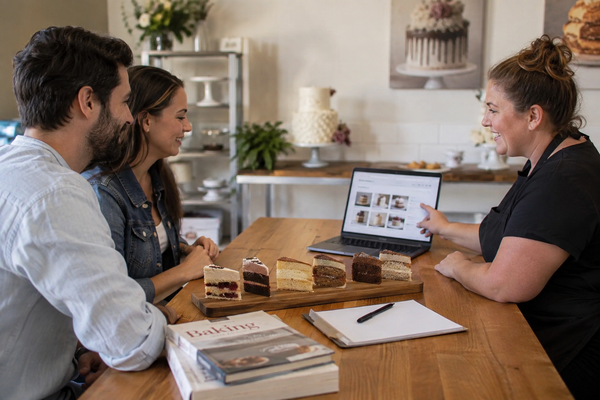
Take the whole thing right there. Confirm the date is open, get name, number, date and headcount, ask for the photo while their phone is already in their hand, and give them a price along with digital invoice before they leave. Never send a walk in to a website form, an email address, or somebody who's in on Thursday.
"Do you do birthday cakes?" is the most valuable sentence anybody says in your shop all day. It's also the one we fumble most.
Four steps, in this order:
- Say yes and confirm the date. That's the only thing they actually asked.
- Get four things. Name, number, date, how many people.
- Ask for the photo now. Their phone is out. Ten minutes later it's a chore.
- Give a price and tell them exactly what happens next.
Say this:
"Yes! The 22nd is open. Let me grab a few details while you're here. What's your name and best number?"
"Got a picture of something you like? Show me now and I'll put it right on the order."
"For about twenty five people, this will be $160 with decoration. I just texted you an invoice."
"I can take the order now"
If they are not ready. "Just order online from invoice when you are ready."
Don't say this:
- "You'd need to fill out the form on our website."
- "Email us the photos and your order number."
- "Maria does the cakes, can you come back Thursday?"
- "We need at least two weeks" as your opening sentence. Say yes first, then the timing.
Picture it. A woman buying a coffee says, "oh, do you do birthday cakes? It's my dad's 70th, the 22nd, about twenty five people." She just handed you the date, the size and the occasion without being asked. Send her to a website and she's finishing that job at 9:40 at night with a toddler asleep on her, which mostly means she doesn't finish it at all. Take it at the counter and it's forty seconds. She came in for a coffee and left having bought a cake.
If the date truly can't be done, give them a real alternative in the same breath. "The 22nd I can't do justice to. The 21st I can, and I'll hold it right now." Half of them say yes.
7. What about coffee?
Take the name at the start, repeat the drink back once, and call it out by name when it's up. Coffee is where a bakery line quietly loses all its time.
Say this:
"Name for the cup?"
"Large oat cappuccino, extra hot. That's you, right?"
"Sarah! Oat cap. Sugar's behind you, lids are at the end."
Don't say this:
- "It'll be a while." Say "about four minutes." A number calms people down. "A while" does the opposite.
- "We don't do that." Say what you can do. "No blended drinks, but I can do you an iced latte with an extra shot."
- Nothing at all, with a finished drink sitting on the bar.
When you're buried, make them in the order they came in, and say so out loud. "I'm going in order, you're third, about five minutes." People will wait ten minutes without complaining if they believe the system is fair.
8. The register and the pickup counter
At the register, say the total, and look away from the tip prompt. On a pickup, find it by their name in seconds and open the box in front of them before they leave.
Taking the money
Say this:
"That's $18.40 whenever you're ready."
"Take your time, no rush at all."
"Thank you Sarah, enjoy the party."
Don't say this:
- "And it'll ask you a question at the end." Everybody knows what the question is. Let the screen ask it.
- Watching the tip screen over their shoulder. Look away. Wipe something down.
- "Cash only" as a surprise at the end. A card minimum belongs on a sign at the case.
Whatever POS you run, the tip prompt and Apple Pay all work the same way socially. They want thirty seconds of privacy to answer a question about money. Give it to them.
If a card declines, say it quietly, once, with no face. "That one didn't want to go through, want to try another?" Never repeat the word declined, and never loud enough for the line to hear.
Handing over a pickup
Find it by name or phone number on your POS. Open the box. Read the writing out loud together. Confirm the time. Then tell them how to carry it.
Say this:
"Let me open it up so you can see it before you go. Happy 70th Dad, that's right?"
"Flat in the trunk, not on a seat. Out of the sun if you can."
"If anything's not right, call us before the party, not after. We'd much rather fix it."
Don't say this:
- "It should be in the back somewhere."
- "Did you get a confirmation email? Can you find the order number?" They should never need to know an order number. You should find them by name.
- Handing over a sealed box nobody checked.
Now the important version of this one. The box says Alison. The order says Allison. Mia spots it while the customer is still walking over, and she says it first, before the box is even open. "Before you look, I want to flag something. We've got one L and it should be two. Fifteen minutes and I'll fix it, or ten dollars off right now. Your call." The customer took the fifteen minutes, posted a photo that night, and told three people the bakery caught its own mistake.
A mistake you catch becomes a story they tell about you. A mistake they find in the parking lot becomes a bad review.
And if you genuinely can't find the order, never say "I don't have you." Say "one second, I'll find it," then look under the phone number, the first name, and the event date.
9. How do you handle a line out the door?
Split the line into lanes and say the lanes out loud. One person on pickups only, one person walking the line, and every cake conversation turned into a callback. A twenty person line that keeps moving feels shorter than a six person line that's stuck.
Thanksgiving Wednesday. Twenty two people deep, three of them just collecting a preorder, one of them wanting to talk about a wedding cake.
- Pickups get their own lane. Those take thirty seconds each. Mixing them into the main line is what turns a holiday into a disaster.
- Somebody walks the line. Hand out numbers, take coffee orders early, tell people what's already gone before they get to the front.
- Cake conversations become callbacks. "A wedding cake deserves more than a shouted two minutes. Give me your number and I'll call you at two."
Say this:
"Pickups, come straight to me on this side, you don't need to wait."
"Heads up, pumpkin pies are gone. Apple and pecan we're good on."
"Thanks for being patient folks. You're all getting one."
Don't say this:
- "We're really busy." They can see that. It sounds like an excuse.
- "I don't know" about what's sold out. Go look, get the real list, announce it to everybody.
- Nothing at all for twenty minutes.
The real fix for a holiday isn't speed at the counter anyway. It's preorders and a pickup list sorted by time slot. If you know Wednesday 4pm to 6pm has thirty eight boxes and you can pull them by name, a holiday is just a busy day. If you're hunting through a notebook, it's chaos.
10. What do you say when somebody's unhappy?
Same five steps, same order, every time. Let them finish. Say sorry for the thing and not the feeling. Agree out loud. Offer the fix before they ask for it. Move it away from the line.
Handle it at your counter and it costs you a cake. Handle it badly and it moves to Google and Yelp, where it's permanent and public. Only 4% of people say they never read reviews of local businesses, and only 7% say they don't expect a business to reply to them (BrightLocal, 2025, 1,026 US consumers). Ninety seconds at your counter is the cheapest version of that conversation you'll ever get.
Say this:
"You're right, and I'm sorry. That's not what we agreed."
"Let's sort it out. I can redo it for this afternoon, or refund you right now. Which helps you more?"
"Thank you for telling me. I'd much rather hear it than not."
Don't say this:
- "I'm sorry you feel that way." The most inflaming sentence in the business.
- "That's our policy."
- "That's not what you ordered." Even when it's true, that's a fight you can't win.
- "I wasn't working that day." They don't care which one of you it was. You're the bakery.
- Arguing in front of the line. Ever.
A guy comes in Saturday morning holding a box. The cake's chocolate, he ordered vanilla. Dani doesn't go looking at the order history. She says, "you're right, and I'm sorry, that's not what you asked for." Then she walks him down to the quiet end of the counter. "Party's at four? I can have vanilla in your hands by two, or refund you right now and you've lost nothing. Which is more useful?" He took the two o'clock cake. Ninety seconds, no manager, no review. The order history conversation never needed to happen at all.
From BakeStreet's data. Across bakeries running on BakeStreet, around 3% of orders get remade or refunded, and the most common single cause is wrong flavor/filling or inscription.
If somebody is shouting, drop your voice instead of raising it. Use their name. Keep the counter between you. "Mr. Reyes, I hear you, and I'm going to fix it. Come down this end with me." If it doesn't settle, or it gets personal, that's a manager's problem and not a nineteen year old's. Say that out loud in training so they know they're allowed to stop.
And if it does land on your Google page, reply once, publicly, short, without relitigating anything. Name the fix, not the fault. "You're right that we got the color wrong, and I'm sorry. We've refunded it. If you'll give us another go, ask for Dani." That reply isn't for the reviewer. It's for the next hundred people reading.
11. Who's allowed to give a refund?
Give everybody on your counter a dollar figure they can refund or remake on the spot without asking anybody. Fifty dollars is a common line. Decide the number now, while nothing is going wrong.
Under that number, they fix it in two minutes and tell you later. Over it, or anything involving a wedding, somebody saying they got sick, or a threat to post about it, that's you, immediately.
Say this when you need the manager:
"I want to get this right for you, and my manager can do more than I can. Let me grab her, two minutes."
Don't say:
- "I'm not allowed."
- "I'd have to ask." Say she can do more for you than I can instead. That's an escalation that sounds like help.
A $38 order of cupcakes came out underfilled. The kid on the counter doesn't call anybody. "That's on us. Refunded, and take a box of six on me for the trouble." Cost you $38 and a bit of product. A manager interrupt, plus a ten minute wait, plus an annoyed customer costs you more than that every time.
12. How do you say no and still be nice?
Never refuse flat. Swap the no for the nearest yes, and name what's driving the limit. Three tiers by tomorrow. A $400 cake for $90. A refund on a cake that's two thirds eaten. All of those have a real answer that isn't just no.
Say this:
"I can't do three tiers for tomorrow and do it well. What I can do by tomorrow is a sheet cake in the same colors, and it'll look beautiful."
"At $90 I'd be setting you up for a letdown. For $140 I can do a version I'd be proud to put our name on. It's the hand piped flowers driving that price."
"It's eaten, so I can't refund it. But I don't want you leaving unhappy, so let me take care of your next one."
Don't say this:
- "No, we can't do that," full stop, with nothing after it.
- "That's not possible."
- "Our minimum is two weeks." Say the yes version. "Two weeks gets you anything. Under that, here's what I can still do."
- Yes to something you can't actually deliver. One rushed bad cake costs more in reviews than the order was ever worth.
And sometimes no really is no. A licensed character. A same day order that would wreck the rest of your production. Somebody who's been nasty to your staff. Say it once, kindly, and don't negotiate with yourself. "I'm not going to be able to do that one, and I don't want to half do it for you. I'd rather be honest."
13. Regulars
Use their name, start their usual before they ask, and write down what they order somewhere a new hire can read it.
Say this:
"Dave! Almond and a black coffee?"
"Haven't seen you in a couple weeks, good to have you back."
"We've got something new in that I think is exactly your thing. On me, tell me what you think."
Don't ask "where have you been?" in a way that needs answering. And don't let a two year regular get treated like a stranger, because that's how you lose him to the shop that learned his name.
Write the regulars down. Not in your head. Somewhere the new kid can read it. Getting greeted by name by somebody you've never met is the best thing a small bakery can do, and it costs you a note on their record.
14. Do bakery staff need a food handler card?
About ten states require one statewide. Alaska, California, Florida, Illinois, New Mexico, Ohio, Oregon, Texas, Utah and Washington. Usually within 30 days of hire, good for two or three years. Plenty of counties require one even where the state doesn't (food handler requirements by state). ServSafe Food Handler is the most widely accepted program. Check your own county before a new hire's first shift, not after an inspection.
Then the counter rules, which are rules and not suggestions:
- Tongs or gloves on food. Always. One hand on money and one on pastry is how you end up in a review.
- Hands washed after the register, after the phone, after the back door.
- Never touch your face, your hair or your apron and then food. People watch this far more closely than you think.
- Nobody eats, drinks or leans on the counter where customers can see.
- If you're sick, you're not on the counter. No debate, no guilt.
And the teamwork half:
- Call it out. "Behind you." "Hot." "Last box of croissants."
- Never correct a coworker in front of a customer. Fix it quietly, talk about it after.
- If your hands are free and the line isn't moving, go to the line. Bag, pour water, take coffee orders.
- Never say "that's not my section." There are no sections in a bakery with four people in it.
The one page cheat sheet
Pin this by the register.
| When this happens | First words out of your mouth |
|---|---|
| Door opens, hands full | "Morning! One minute and I'm right with you." |
| Phone rings mid rush | "Hudson Street, this is Dani. Can I grab your name and number first?" |
| Somebody stuck at the case | "That one's my favorite. Crunchy outside, custard in the middle." |
| Suggesting something extra | "Sourdough came out twenty minutes ago if you want one warm." |
| Allergy question | "No nuts in the recipe. But we bake nuts here, so I can't call it nut free." |
| "Do you do custom cakes?" | "Yes! The 22nd is open. What's your name and best number?" |
| Handing over a pickup | "Let me open it up so you can see it before you go." |
| Card declines | "That one didn't want to go through, want to try another?" |
| Line out the door | "Pickups, straight to me on this side." |
| Something's wrong | "You're right, and I'm sorry. Let's sort it out." |
| You need the manager | "She can do more for you than I can, let me grab her." |
| You can't do it | "I can't do that. What I can do is…" |
| A regular walks in | "Dave! Almond and a black coffee?" |
| You don't know | "Let me get you a real answer instead of a maybe. Twenty minutes." |
Get this as a printable checklist, along with the ten shift training plan, your open and close lists, and a sign off sheet for each new hire's file. Free, no email needed.
One Saturday, all of it
8:02am. Door opens while Dani's bagging order. Head up. "Morning! Two minutes." Nobody stands there in silence.
9:30am. A guy staring at the case. "That one's a canelé, crunchy outside, custard in the middle." He buys two.
10:15am. "Do you do birthday cakes?" Forty seconds. Date confirmed, name, number, headcount, photo on the order, price. Take order or send invoice. No website, no form, no Thursday.
11:40am. Phone rings mid rush. Name and number first, callback booked for two. Kept at two.
12:05pm. Pickup. Box opened at the counter. Spelling caught by staff, not by the customer.
1:20pm. Wrong flavor. Listened all the way through, said sorry for the thing, moved away from the line, two options offered. Ninety seconds, no manager.
2:00pm. Line out the door. Pickups in their own lane, sold out list announced, wedding inquiry turned into a callback.
4:45pm. Dave comes in. "Almond and a black coffee?" He's been coming for two years. He always will.
Not one of those needed a trained hospitality professional. Every one of them needed somebody who already knew the sentence.
Questions people ask
How do you train bakery staff on customer service?
Teach exact sentences, not attitudes. One situation a day for the first two weeks. Saying hello, the case, the phone, the allergy line, the cake order. Give them the three or four sentences that cover it, and act out the unhappy customer one out loud, twice. "Have good customer service" takes a year to land and usually never does. "You're right, and I'm sorry, let's sort it out" lands in a single shift.
How long does it take to train a new bakery counter employee?
Ten shifts if you work to a plan. One topic a shift, you show them, then they do it with a real customer while you watch. Without a plan it takes months and stays uneven, which matters because food service loses 5.4% of its people in a single month against 3.2% across all other industries. Somebody at your counter is almost always new.
Do bakery staff need a food handler card?
In about ten states, yes, statewide. Alaska, California, Florida, Illinois, New Mexico, Ohio, Oregon, Texas, Utah and Washington. Usually within 30 days of hire and good for two or three years. Lots of counties require one even where the state doesn't, so check your county rather than just your state. ServSafe Food Handler is the most widely accepted program.
What should bakery staff say when somebody walks in?
Acknowledge them inside three seconds even with your hands full. Eye contact, hello, and a specific time. "Morning! Be right with you, one minute." Standing there in silence while you finish a job is the single most common complaint in bakery reviews, and it costs nothing to fix.
How should a bakery handle a complaint about a cake?
Five steps, same order every time. Let them finish before you start fixing. Say sorry for the thing and not the feeling, so "I'm sorry the color's wrong," never "I'm sorry you feel that way." Agree out loud that they're right. Offer two fixes with times on them before they have to ask. And walk it down to the quiet end of the counter.
How do you respond to a bad bakery review on Google?
Reply once, publicly, short, without arguing the facts. Name the fix instead of the fault, and invite them back to a particular person. Only 7% of people say they don't expect a business to reply, and most expect it within two or three days, so silence reads as not caring to everybody who comes along after. The reply is for the next hundred readers, not for the reviewer.
How much should staff be allowed to refund without asking?
Give everybody on the counter a fixed number, fifty dollars is a common line, that they can refund or remake on the spot with nobody's permission. Under it they fix it in two minutes. Over it, or anything involving a wedding, somebody saying they got sick, or a threat to post about it, goes straight to the manager. The whole point is that the number gets decided before a problem happens, not during one.
What do you say if somebody asks whether something is gluten free or nut free?
Answer the recipe question honestly, then say the shared kitchen line every time. "No nuts in the recipe, but we bake nuts in this kitchen, so I can't call anything nut free." Unless you have a separate space and process, it's made without gluten, not gluten free. The FDA lists nine major allergens including sesame since January 2023, and seven of them are on a bakery bench daily, so never guess just to fill an awkward pause.
How do you upsell in a bakery without being annoying?
One suggestion per customer, with a reason, offered once. The three reasons that work are freshness, "that came out twenty minutes ago," scarcity, "those sell out by eleven," and timing, "if it's for tomorrow I'd take the loaf instead." "Would you like to add a cookie for a dollar?" on every transaction is a drive thru script, and people tune it out by their second visit.
Should staff take a cake order at the counter or send people to a form?
At the counter, always. Somebody asking "do you do birthday cakes?" has already told you they're ready. Confirm the date, take name, number, date and headcount, ask for the photo while their phone is in their hand, and give a price range. Sending them to a website form means they're finishing that job at 9:40 at night with a kid asleep on them, and plenty of them never do.
How do you handle a holiday rush in a bakery?
Split the line into lanes and announce them. Put one person on pickups only, because those take thirty seconds and mixing them into the main queue is what makes a holiday feel like chaos. Have somebody walk the line handing out numbers and saying what's already gone. Turn every cake conversation into a callback. And do the real work beforehand: preorders with time slots and a pickup list you can pull by name.
What's the worst thing a bakery employee can say to a customer?
"I'm sorry you feel that way." It takes a fixable problem and makes it personal. Close behind are "that's our policy," "I wasn't working that day," and "you'd have to email us." All four tell the customer the problem is theirs to carry now.
What should staff do when they don't know the answer?
Say so, and give a time. "Let me get you a real answer instead of a maybe, I'll call you back in twenty minutes." Then call back in twenty minutes. Guessing on a date, a price or an allergy is where the real damage starts, and nobody has ever been annoyed by a twenty minute wait that actually happened.
How do you make new staff confident with customers fast?
Give them the scripts and the authority to use them. Confidence at a counter comes from two things. Knowing the exact sentence for the situation, and being allowed to solve the problem without going to fetch somebody. A new hire with five memorized lines and a fifty dollar refund limit handles more in week one than an untrained person does in month six.
Why any of this matters more than the baking
Your croissants probably aren't the reason people come back. There are three other shops in town making a decent croissant. What they can't copy is how somebody feels in the eleven minutes they spend with you. Looked after, or processed.
All eleven of those minutes happen at the front counter. Not in your kitchen. With a nineteen year old who's been here five weeks and is doing their best with whatever you told them.
So tell them. One section a day. Act out the unhappy customer twice. It's awkward and it's the one that saves you.
Then give them what they need to say yes. Because half the bad moments on this page are really the same moment underneath. Somebody at the counter who couldn't find an order, couldn't check an allergy, couldn't take a cake order, couldn't see what you already promised for Saturday. That isn't a people problem. That's a shop where everything lives in one person's head and a notebook under the register.
When the orders, photos, allergy notes, deposits and pickup times all sit in one place anybody in an apron can open, these scripts get easy, because the answer is already right there. That's what we built BakeStreet to do.
But start with the words. Print the checklist and pin it by the register tonight.
Sources
- US Bureau of Labor Statistics, Job Openings and Labor Turnover Survey, November 2024. Total separations rate for accommodation and food services, 5.4% for the month, against 3.2% across all industries.
- US Food and Drug Administration, Food Allergies. Nine major food allergens, sesame added effective January 1, 2023 under the FASTER Act. Roughly one third of foods reported to the Reportable Food Registry as a serious health risk involved an undeclared allergen, milk most common.
- BrightLocal, Local Consumer Review Survey 2025. Panel of 1,026 US consumers. 4% never read online reviews of local businesses, 7% don't expect businesses to reply to reviews, 63% expect a reply within two or three days up to a week.
- 360training, Food Handler State Requirements. States requiring a food handler card, the typical 30 day deadline, and two to three year validity. Check your own county health department too.
Current as of October 2026. Use it freely with your own team. Put your own bakery name, your own items and your own refund limit on it before you print it.