Are Customers Buying Smaller Cakes? What It Means for Your Bakery
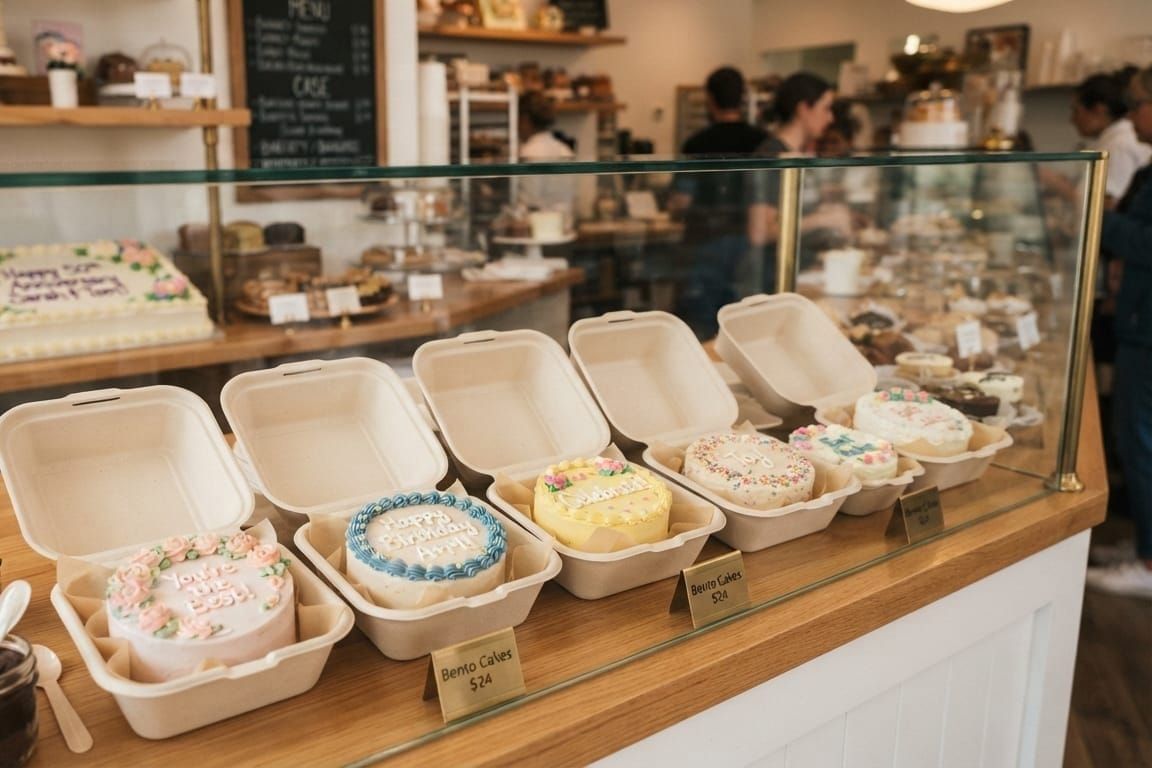
Quick answer: Yes. Cakes are getting smaller, slices are getting smaller, and the eight-inch round is doing work the quarter sheet used to do. But the dessert money has not left the building. It moved. Customers are trading size for quality, occasion and looks. The bakeries that win this are the ones who stop pricing cakes by how big they are and start pricing them by how long they take.
Are customers really buying smaller cakes?
They are. Walk your own case for a second. The single-serve stuff moves. The bento cakes, those four-inch cakes that come in a little takeout box, sell out by Saturday noon. And somewhere in the back, a quarter sheet is sitting there like it missed its ride.
You are not imagining it, and it is not just your shop.
Puratos runs a consumer research program called Taste Tomorrow, built on more than 23,000 people across 50-plus countries. Their 2026 read: 64% of North Americans said they would rather have a smaller treat than give up flavor. Searches for "mini desserts near me" jumped 400% in a single quarter. Online chatter about mini tartlets was up 1,500% in the same stretch.
The Shelby Report's 2026 in-store bakery roundup says it plainly. 69% of shoppers go looking for portion-controlled snacks, and 60% of millennials pick the smaller size so they can watch their weight without giving up the treat.
And small sells. Rich Products found 93% of shoppers said they would buy a mini cake, to treat themselves or to share, and 69% said they would buy at $4.99. Rich is a supplier, so that is their own research and not independent. The direction matches everything else, though.
The demand did not disappear. It got packed in a smaller box.
Why are customers buying smaller cakes?
The table got smaller. This is the quiet one, and it is the biggest. In December 2025 the Census Bureau counted 39.7 million one-person households in the United States. That is 29% of all households, up from 20% in 1975. Married couples with kids under 18 are down to about 37% of households from 54%. Fewer people under the roof means fewer people at the party. A cake that serves 24 is a problem for a household of two. This is not a trend. This is the country.
GLP-1 is real, and most bakers read it wrong. About one in eight US adults is on a GLP-1 medication, per National Restaurant Association research from May 2026. Cornell researchers, working off a Numerator panel of about 150,000 households, found households cut grocery spending 5.3% within six months of starting one, with savory snacks down about 10% and sweets and baked goods dropping about as much.
Scary. Here is the part nobody passes along. That same NRA study found GLP-1 users bought from a restaurant 7.6 times in the past week, against 5.1 times for everybody else. 87% say they enjoy eating out. 71% call it essential to their life, ten points above the general public. The NRA titled the whole piece "shifting habits, not shrinking demand." These customers still want the treat. They want it small, and they want it worth it. 76% said they would pay more for something that fits how they eat now.
One good thing beats one big thing. Butter and cocoa got expensive. Customers got pickier. So they buy one beautiful small cake instead of a big ordinary one. That is good news for a scratch bakery and bad news for whoever is competing on size.
How much are couples spending on wedding cakes in 2026?
Couples did not stop getting married. The Knot's 2026 Real Weddings Study, covering 10,474 US couples married in 2025, puts the average guest count at 117 and average spend per guest at $292.
Now look at the cake line. Average wedding cake: $540. Median: $480. Bottom quarter of couples: $300. Meanwhile 72% still do the cake cutting, and 53% added a dessert bar.
Read that again. Nearly three in four still want the moment. Half are buying a spread of small things around it. The cake stopped being the whole dessert and became the centerpiece of one. If tiers are all you sell, you are bidding on a shrinking line while the dessert bar money walks down the street.
How should you price a small cake?
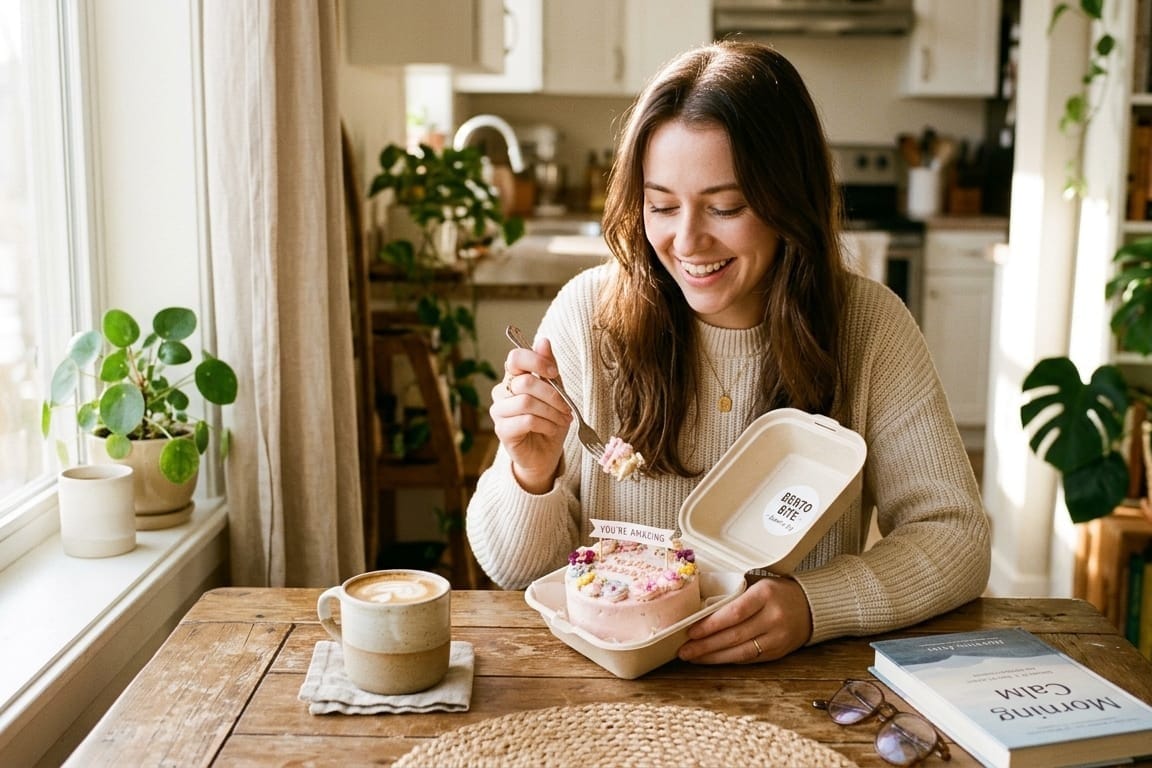
Most cake menus price by size. Bigger cake, bigger number. That math quietly robs you every time somebody sizes down, because your hands do not move twice as fast on a small cake.
Time it yourself this week. Here is what the clock usually says. These are example numbers, so run yours.
| Cake | Servings | Decorating minutes | Minutes per serving |
|---|---|---|---|
| 4-inch bento | 3 | 12 | 4.0 |
| 6-inch round | 8 | 18 | 2.3 |
| 8-inch round | 15 | 25 | 1.7 |
| Quarter sheet | 24 | 30 | 1.3 |
There it is. The four-inch eats more than twice the labor per serving that the eight-inch does. Crumb coat, chill, finish, write, box. That list does not get shorter because the cake got smaller.
So when you price a small cake as a fraction of a big one, you are paying for the privilege of selling it.
| Cake | Servings | Priced down from the 8-inch | What holds your rate | Per serving |
|---|---|---|---|---|
| 4-inch bento | 3 | $25 | $38 | $12.67 |
| 6-inch round | 8 | $45 | $55 | $6.88 |
| 8-inch round | 15 | $75 | $75 | $5.00 |
That $38 bento is not greedy. It is the only number that pays your decorator. And if the order is custom, charge a design fee on top. The consult, the sketch and the cleanup are the same whether the cake serves three or thirty.
Your decorating time, your eye and your packaging are the product. The crumb is the cheapest thing in the box.
Five ways to make more money on a smaller cake
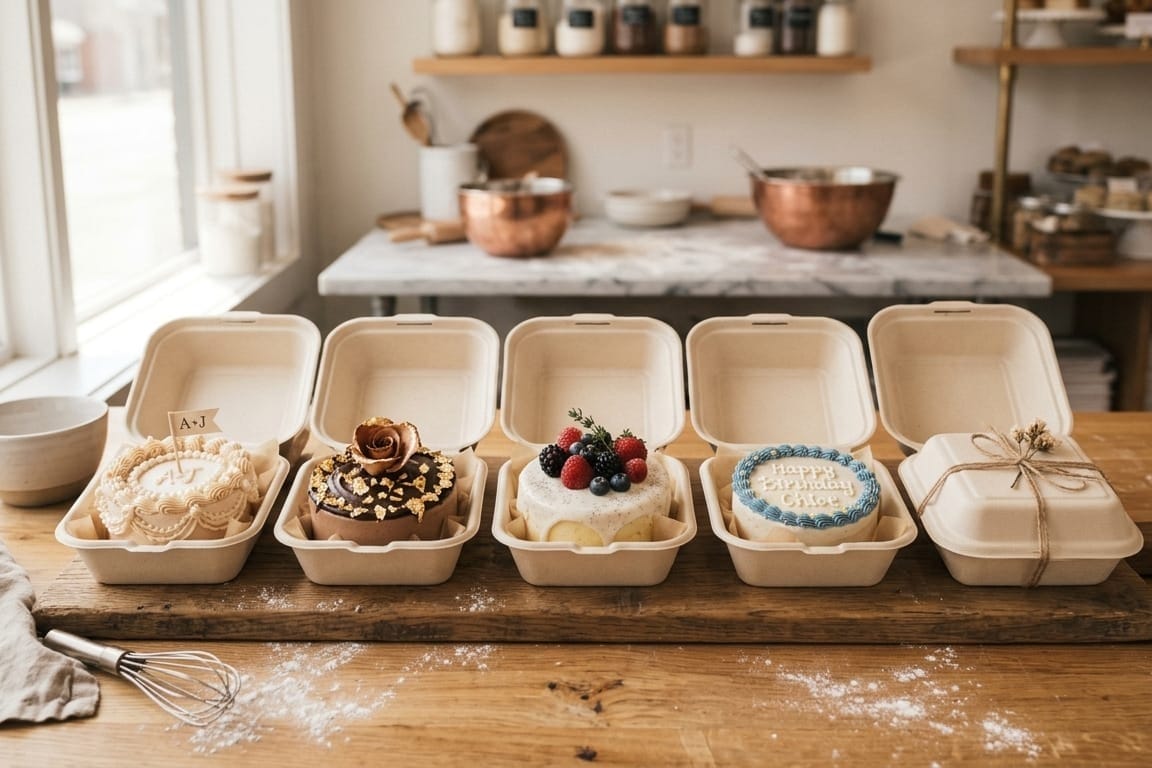
1. Build a real small-cake line, not a leftover. Give it a name, one size, one price and a photo. "Minis" on a chalkboard is not a product. Six flavors at one price is.
2. Price the decoration, not the diameter. Publish three finishes: simple, signature, custom. Same six-inch base, three prices. People trade up when they can see what up looks like.
3. Sell the box, not the cake. Four minis in one box beats a single six-inch on ticket almost every time, and it fixes the real problem, which is that nobody in the group agrees on flavor.
4. Invent occasions. Birthdays are capped by the calendar. Half-birthdays are not. Neither is first day of school, closing day, Friday, or sorry-I-was-a-jerk. Small cakes are cheap enough to buy without a reason. Put the reasons on your signage.
5. For weddings, lead with the cutting cake. Quote a gorgeous small display cake, a matching sheet in the back, and a dessert table you build and price. You stop losing the bid on budget and start owning the whole dessert spend.
What to stop doing
Stop quoting quarter sheets as the default for office parties. Stop sizing up so there are leftovers, because leftovers are a complaint now. Stop discounting minis to move them. And stop assuming the woman buying a four-inch cake is on a budget. Half the time she is buying twice a month instead of twice a year.
FAQ
Are people buying fewer cakes? No. They buy small more often instead of big once a year.
Should I raise prices on small cakes? Time your decorator first. If your six-inch earns less per minute than your eight-inch, your menu is upside down.
Will GLP-1 customers stop buying dessert? The research says they eat out more than everyone else and will pay more for something that fits how they eat. They want one perfect bite, not none.
Is the mini cake thing going away? The household numbers say no. Smaller homes and smaller parties are here to stay.
Bottom line
The cake got smaller. Your opportunity did not. Price by the clock, sell the occasion, build the small line on purpose, and let the big cakes be a specialty instead of a default.