Why Bakeries Lose Orders at Checkout (And How to Stop It)

There's a pattern in bakery checkout data that most owners don't notice until it's pointed out.
It's not about product quality. It's not about pricing. It's not even about marketing.
It's about what happens in the final five or ten seconds before someone becomes a customer.
The checkout moment nobody's measuring
Here's a scenario from a bakery owner in NYC.
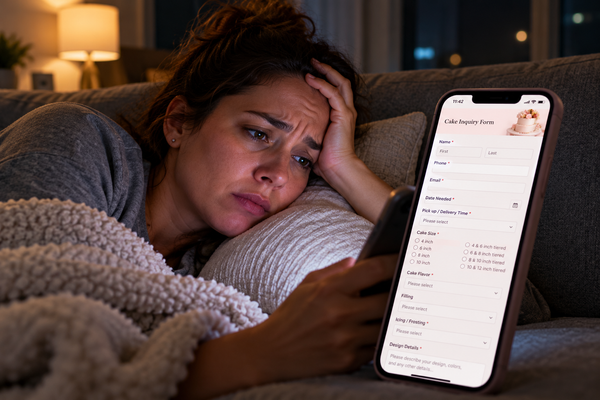
A regular customer came in and mentioned she'd almost abandoned her online order the night before. Not because she changed her mind about the cake. She was in bed, her wallet was downstairs, and the effort of getting up to grab her credit card felt like too much at 10pm. She only completed the order because she saw the Apple Pay option.
This isn't an isolated case. Checkout data across bakery clients shows average cart abandonment rates of 35-40%. Bakeries with one-tap payment options see this drop to 20-25%.
That's a significant number of sales being recovered simply by reducing friction at the payment step.
Where digital wallets actually matter for bakeries

The impact shows up in three distinct areas:
1. Late-night and mobile orders
A substantial portion of bakery orders now happen between 8pm and past midnight. These are typically:
- Last-minute birthday cake orders
- Custom quote they could not go through during day
- Repeat customers reordering favorites
The common thread? These customers are often in bed, on the couch, or otherwise settled for the evening. Asking them to retrieve a physical wallet creates a decision point where they'll often choose "I'll do this tomorrow" (which frequently doesn't happen).
One bakery saw late-evening order volume increase by 160% within three months of enabling Apple Pay and Google Pay. Same marketing, same products, just removed that one friction point.
2. In-store transaction speed
This is where the operational impact becomes visible to your team.
Checkout times at bakery locations before and after implementing tap-to-pay:
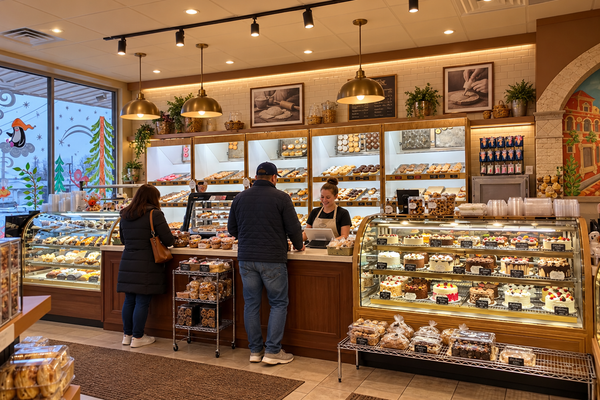
- Traditional payment (card insert/swipe or cash): 35-50 seconds average
- Contactless payment: 10-15 seconds average
During peak periods like Saturday mornings and pre-holiday rushes, this difference compounds. A bakery serving 100+ customers during a Saturday rush saves roughly 30-60 minutes of total transaction time just by having faster payment processing.
That means shorter lines, less staff stress, and the capacity to serve more customers in the same operating window.
3. Trust signals for new customers
This is the subtle one that doesn't show up in immediate metrics.
When customers see familiar payment options at checkout, it creates a micro-moment of reassurance. They're encountering something they use daily at thousands of other merchants.
For newer bakeries or those acquiring first-time online customers, this familiarity reduces hesitation. You're not asking them to trust a new bakery and enter sensitive payment information in an unfamiliar checkout flow. You're letting them use a payment method they already trust.
The customer segments this serves

Digital wallet payments particularly resonate with:
- Mobile-first orderers: People placing orders from phones rather than computers (which is increasingly the majority)
- Security-conscious buyers: Customers hesitant to enter card details on websites, but comfortable with tokenized payments
- Convenience-driven customers: Anyone in a hurry, multitasking, or ordering in situations where pulling out a wallet is inconvenient
What the implementation actually involves
Bakeries delay this assuming it's complicated. In practice, for most modern setups, it's straightforward.
For online checkout: If you're using a contemporary Bakery Software, enabling Apple Pay and Google Pay is typically a settings toggle. Implementation time: 5-10 minutes.
For in-store payments: If you have contactless-enabled POS and card readers (the kind that accepts tap credit cards), you already have the necessary hardware. Apple Pay and Google Pay work through the same NFC technology.
If you're on older equipment, you'll need to upgrade to contactless-capable terminals, but this is increasingly becoming an industry standard regardless.
Real performance data
Results from bakeries who implemented this over the past year:
- Average reduction in cart abandonment: 5-10 percentage points
- Reduction in average checkout time (in-store): 30-40%
- Growth in late-evening orders: 15-25%
These aren't dramatic overnight transformations, but they represent meaningful revenue recovery from customers who were already trying to buy from you.
How this fits into the broader customer experience
The reason this matters goes beyond just "offering another payment option."
Your customer journey involves multiple steps:
- Discovery (social media, search, word of mouth)
- Consideration (browsing products, reading reviews)
- Selection (choosing specific items, customizing orders)
- Payment (completing the transaction)
Many bakeries invest heavily in steps 1-3. Better photography, stronger social presence, improved product descriptions. All valuable.
But if step 4 creates friction, you're losing customers who successfully navigated everything before it. You did the hard work of earning their interest and preference. Don't lose them at the conversion point.
The customer behavior shift

Digital wallet adoption has grown significantly:
- Apple Pay is used by approximately 45% of iPhone users in the US
- Google Pay serves a comparable portion of Android users
- Contactless payments overall have become normalized through widespread retail adoption
For many customers, especially those under 40, this is now their default payment method. They use it at coffee shops, grocery stores, gas stations, and retail locations.
When they encounter a checkout that doesn't support it, they're not thinking "this bakery is behind on technology." They're just experiencing friction. Some percentage will complete the purchase anyway. Some percentage won't.
Implementation recommendation
If you haven't enabled digital wallet payments yet, here's the suggested approach:
- Check your current payment processor capabilities - Most modern systems already support this; you may just need to enable it in settings
- Enable it for online checkout first - This is typically the easier implementation and shows immediate results in cart abandonment rates
- Update in-store hardware if needed - If your card readers don't support contactless, consider this as part of your next hardware refresh
- Train staff on the basics - They don't need deep technical knowledge, just awareness that customers can pay by tapping their phone
- Add simple signage - A small sign at checkout indicating "Apple Pay and Google Pay accepted" helps customers know the option exists
What this isn't
This isn't a marketing strategy. It's not going to drive new customer acquisition or build brand awareness.
It's operational optimization. It's removing a barrier that's preventing some percentage of willing buyers from completing their purchase.
Think of it like having adequate parking near your bakery. It doesn't make your products better, but its absence creates a problem that costs you sales.
Final perspective
Bakery owners focus heavily on product innovation, marketing channels, and customer acquisition. All important.
But some of the highest-ROI improvements are the unglamorous ones: making existing processes smoother, reducing friction points, meeting customers where their behaviors already are.
Digital wallet support falls into that category. It's not exciting. It won't make for compelling social media content. But it quietly increases the percentage of interested customers who become paying customers.
And in an industry where margins matter and every order counts, that's worth the ten minutes it takes to implement.